
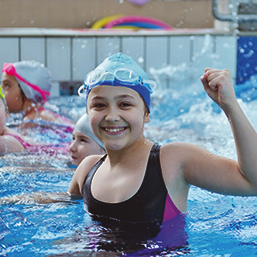
After a much-needed summer break, you’re preparing to sign up your child for fall extracurricular activities. You're considering soccer, music lessons, and a robotics club. You’ve read about the benefits of extracurriculars, and you’re feeling good about your decision. But here’s a question worth asking: What if the unstructured time between those activities is just as important as the activities themselves?
We often think of our kids' free time as empty
space. We see it as a time that could be filled with something productive. But new research suggests that unstructured time isn't a void. It's the foundation that helps children benefit even more from their structured activities. Think of it this way: Extracurriculars build physical and mental muscle, but downtime lets them recover and grow stronger.
The Cost of Constant Activity: When a child's schedule is packed from morning to night, something gets squeezed out, and it's usually the very things that help them thrive. Free play, daydreaming, and simply doing nothing aren't "wasted" hours. They're when children learn to problem-solve, explore their own interests, and build the confidence that comes from directing their own time.
Psychologists have long warned that overscheduled children miss out on developing crucial non-academic skills – from coping with setbacks to building strong relationships. A study published in The Economics of Education Review found that when children spend too much time on homework and organized activities, the last hour of enrichment no longer builds skills. Instead, it actually harms their mental well-being and makes them more anxious, depressed, or even angry.
The researchers analyzed time diaries of over 4,300 children and found that the downsides of overscheduling hit hardest during the high school years, when academic and extracurricular pressure peaks. But the warning signs appear much earlier.
What Free Play Does to the Brain: Free play isn't just "nice to have." It actually changes how a child's brain develops. A 2025 randomized controlled trial of 125 elementary school children found that just 45 minutes of free play per week (for 12 weeks) enhanced brain activity related to social cognition and improved prosocial behaviors. The children who participated in free play showed measurable changes in their neural responses, particularly in areas linked to empathy and understanding others' actions.
These findings align with earlier research on the role of free play in "whole child" development. Scientists have found that unstructured play affects brain circuitry for neural growth, regulation, and even repair. When children have time to play freely, they develop emotional and social skills that can't be taught in a structured setting, such as negotiation, collaboration, and emotional regulation.
One scientific review found that free play benefits children's cognitive and socioemotional development, though it noted that free play combined with other methodologies may yield the strongest results. This suggests that the balance between structure and freedom is what matters most.
The Neuroscience of Boredom: Here's something parents rarely hear: boredom is actually good for kids.
When a child says "I'm bored," their brain isn't idle. The brain's "default mode network" (the system active when we're not focused on a task) fires up during downtime. This is when creativity, self-reflection, and identity formation happen. Boredom opens up space for curiosity, and curiosity is the engine of learning.
Jamie Jirout, a researcher of Education and Human Development, explains that giving children unstructured, screen-free time helps them embrace curiosity and develop life skills. "When kids have the agency to do what they want to do, they're going to be motivated to get into activities in a deep way," she says. "That motivation will then provide a lot of experience and opportunities for them to develop different skills that they might not get in school, or from more structured activities."
The "Sweet Spot" for Extracurricular Activities: So how many activities are too many? Pediatric experts suggest a simple rule of thumb: for Kindergarten-age children, no more than one organized activity at a time, with plenty of unscheduled time left over in the week. For older kids, the sweet spot is often one or two child-led activities per week, plus unstructured time for play and connection.
The key is to pay attention to your child's cues and not to compare your family to others. Make sure your child genuinely enjoys the activity, maintains sleep and mood patterns, and still has plenty of time to rest and play. Conversely, if the activity becomes a source of stress or interferes with rest, this may be a sign to step back.
A Practical Blueprint: Building unstructured time into a busy schedule doesn't mean canceling everything. It means protecting "white space." That might mean one afternoon a week with no obligations, an evening with no practices, or simply 45 minutes of free time after school before homework begins.
Parents often worry that unstructured time means screentime. But the two aren't the same. Screentime doesn't count as downtime. The brain is still actively processing stimulation designed to hook attention. True downtime means screen-free, adult-free time where children choose their own activities. That might be building a fort, drawing, riding a bike, or simply daydreaming.
Extracurriculars enrich our children's lives in countless ways. They build skills, friendships, and confidence. But the greatest gift we can give children, alongside those opportunities, is the space to simply be. We can allow them to rest, to play, and to discover who they are when no one is watching. That's not a rejection of activities. It's the secret ingredient that makes them truly worthwhile.
Shannon specializes in writing about families. Her son recently enthusiastically replied, “Cool mom!” when she confided her dream of writing fiction.
See our related articles:







Calgary’s Child Magazine © 2026 Calgary’s Child