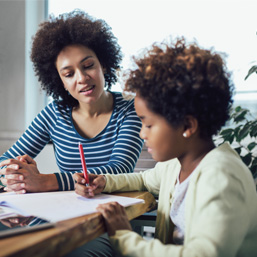
Home and community education is growing every year as a flexible, personalized, relaxed alternative to physical classroom schools. There are three big questions that every parent needs to ask themselves before they decide to make the switch.
How much do I want to be involved?
This is an important question. Some options require minimal support from the parent, while others require full immersion and provision provided by the parent. It’s your choice.
Does my child want to do this?
Although most parents do not think of getting their child’s consent for learning at home, cooperation will be much easier to obtain if both parties agree to the delivery of education at home. A “Learning Agreement” could outline each parties’ responsibilities. This will help clarify disagreements when the work needs to be done. Have the child and parent sign the agreement and display it for the year in a central place.
How does my child learn best, and what are their interests?
This is where parents know their child best. Is the child an introvert, extravert or otrovert? Will they want a constant barrage of activities or a lot of quiet time on their own? Are they auditory, visual, or kinesthetic learners? Will they do best learning through auditory content, visuals, or by doing activities? Are assignments written in stone, or do you want a program where you can deviate from the standard school curriculum and choose activities and resources that capture your child’s interests?
Your answers to these questions will help guide your pathway. Here are several home learning options provided by the Government of Alberta Education. Each option allows the child to earn a government diploma if they choose to follow the Alberta Programs of Study Curriculum Outcomes for at least the high school component – Grades 10 to 12.
Supervised (Supported and Funded) Home Education
Parents can either teach themselves or procure tutors, pods, co-ops, and free-market online courses such as Khan Academy and Outschool. Parents notify with a supportive home education school board that offers two facilitator support visits per year. Parents choose activities, resources, and evaluation methods, but do not have to give marks, nor follow the government’s grade-based Alberta Programs of Study Outcomes. There is no testing.
Best for:
Unsupervised (Unsupported and Unfunded) Home Education
Instead of notifying a homeschooling board, parents directly notify the government of their intent to home educate. They do not require a written plan or facilitator visits. Parents can outsource teaching and use any resources they wish to provide their child’s education. Children gain post-secondary admission by challenging the Grade 12 diploma exams. They can study for them using any resources they wish.
Best for:
Distance Education Through Online Programs
This is school delivered through a screen in your home. The school is responsible for all delivery of the Alberta Programs of Study outcomes per grade. Parents make sure the child gets the assignments done just like homework.
Best for:
Distance Education Through Teacher-Directed and Print-Based Programs
This is also school-provided education in your home, but with little teacher-child interaction. A big box of books is delivered to your door, and it is up to your child to self-teach from the materials. It is correspondence-based education delivery and tutorial style teaching – the teacher is available by phone or email if the child reaches out for help. This type of program is best for independent and self-disciplined learners who can read well.
Best for:
Shared Responsibility – Part School Responsibility and Part Parent Responsible Home Education
This option is best if parents want to provide some subjects and leave the others for the school to cover. It’s a hybrid model of education, where students can learn best in the format and delivery model that works for their temperament, interests, age, and, most of all, their learning style in each subject area.
Best for:
Remember, you only commit to a program for the September to June school year. Next year, your child can try out something different. Enjoy the buffet of choices Alberta provides.
Judy Arnall, BA, CCFE, DTM is a certified brain and child development specialist and master of non-punitive parenting and education practices. She is the bestselling author of five print books translated into five languages, including Discipline Without Distress and Parenting With Patience. Her latest bestselling books are Unschooling To University and The Alberta Happy Homeschooling Handbook – Alberta, available at albertahomeschooling.ca and professionalparenting.ca.






Calgary’s Child Magazine © 2026 Calgary’s Child