
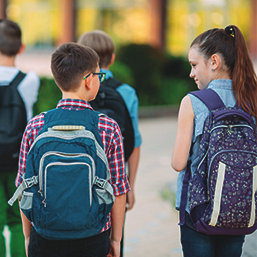
Over the years, Calgary’s Child Magazine has shared countless back-to-school tips from educators, parenting experts, and family specialists. When we looked back at some of the advice that continues to stand the test of time, one message was clear: school success starts long before the first bell rings.
Parents often wonder: Am I doing enough to help my child succeed at school?
The good news? It’s not always the big gestures that make the biggest impact.
While new backpacks, school supplies, and getting organized for the first day are all part of the back-to-school routine, some of the most important things children need cannot be purchased at a store.
The small, consistent things families do every day help children feel supported, build independence, and approach school with confidence.
Show Interest in Their School Day
Children don’t always come home ready to share every detail about their day. Sometimes the answer really is “fine.” Keep asking anyway.
Showing interest tells children that their experiences matter and that you are there to listen when they are ready to talk.
You don’t need to ask a dozen questions. Try simple conversations:
A few minutes of connection can open the door to bigger conversations.
Build Independence Before They Need It
One of the best gifts parents can give children is the confidence that comes from doing things for themselves.
As children grow, they need opportunities to practise everyday skills at home so they feel capable at school.
Small responsibilities build important skills such as organization, problem-solving, and self-confidence.
Encourage your child to:
Children may need reminders and support along the way, but gradually stepping back allows them to develop confidence and independence.
Keep Reading Together
Reading together doesn’t have an age limit.
While reading aloud is often associated with younger children, older children still benefit from sharing books, talking about stories, listening to audiobooks together, and discussing what they are reading.
Reading supports vocabulary, comprehension, imagination, and curiosity. It also shows children that reading is something to enjoy, not just something assigned for school.
A few minutes of reading together can become one of the best parts of the day.
Talk About Kindness and Belonging
School is about more than academics. Children are learning how to be part of a community.
Conversations at home about kindness, empathy, inclusion, and problem-solving help children navigate friendships and classroom relationships.
Talk about:
Children who feel connected and accepted are better able to participate, learn, and build positive relationships.
Create Healthy Routines
A predictable routine helps children know what to expect and reduces some of the stress that can come with busy school days.
Consistent habits around sleep, mornings, meals, and homework help children feel more prepared and organized.
A few simple routines that make a difference:
Healthy routines are not about perfection. They are about creating a rhythm that helps children feel secure and ready for the day ahead.
Support Homework Independence
Homework is an opportunity for children to develop responsibility, organization, and problem-solving skills.
Parents can help create the conditions for success, but children also need opportunities to learn how to manage their own work.
Helpful strategies include:
The goal is not perfect homework. The goal is helping children become confident, independent learners.
Communicate With Teachers Early
Parents and teachers share the same goal: helping children succeed.
Building a positive relationship with your child’s teacher from the beginning creates a stronger connection between home and school.
Share important information about your child, ask questions when you need clarification, and communicate concerns early.
A strong partnership helps everyone better understand and support your child.
Celebrate Effort, Growth, and Progress
Children need to know that learning is a process.
Instead of focusing only on grades, achievements, or results, notice the effort behind the accomplishment.
Try phrases like:
“I noticed how hard you worked on that.”
“You kept trying even when it was challenging.”
“You should be proud of how much you improved.”
Helping children recognize their own growth builds confidence and encourages them to keep learning.
Help Children Feel They Belong
Every child wants to feel accepted, valued, and supported.
Parents can help build confidence by reminding children:
School success is not just about getting the right answers. It is about feeling safe enough to try.
A Final Note for Parents
Children don’t need perfect parents. They need caring adults who show up, listen, encourage independence, and remind them that learning is a journey. The little moments at home often become the confidence children carry into the classroom. As another school year begins, remember: the everyday things you do matter. The backpack may carry the supplies, but the support, encouragement, and connection you provide are what help children thrive. CCM
See our related articles:







Calgary’s Child Magazine © 2026 Calgary’s Child