
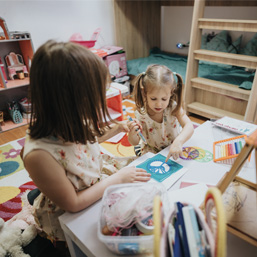
Many children grow up sharing a room with a sibling. This living arrangement is convenient for families, can be lots of fun for the kids, but can also become dramatic and frustrating in an instant. Late-night giggles, whispered conversations, and the comfort of not being alone can be great parts of sharing a space. But, along with those joyful moments, can come arguments about noise, mess, toys, or who is touching whose things. Although sharing a bedroom is a practical reality for most families, it can become a learning opportunity for important life skills. For example, just like adults who share spaces, children need to learn how to communicate and respect each other’s needs. Conflict is completely normal, but there are ways we can troubleshoot when sharing a space goes wrong.
One of the most common challenges children experience when they share a space is ownership and personal belongings. Naturally, children become upset when a sibling uses their toys or moves their things without asking. A helpful strategy is creating a simple “roommate agreement” between siblings. Parents can sit down with their children and talk about what will help their shared space run smoothly and ask questions like: what helps the room feel calm? What should we do about toys in the room? What should bedtime look like? Together, siblings can help create simple ground rules that encompass what everyone needs from the space. Make this fun by crafting the rules together into a colorful sign that can be hung in their bedroom so they are reminded of the ground rules they created, and they are more motivated to respect their sibling’s space, items, and boundaries.
Another helpful way to support siblings who share a space is by creating opportunities for them to work toward a common goal. When children feel like they are on the same team, it can shift the focus away from competition or conflict and towards cooperation. Working together to improve their shared space can help build a sense of responsibility in the room they both use. For example, siblings can try working together to clean the room before going to bed, or organize their toys at the end of the day. They can even take turns watering a plant that is in their space. Set up opportunities for easy art like whiteboards, bulletin boards or frames that can easily be used to swap out artwork. This allows siblings to creatively and easily renovate the space together, keeping things fresh and fun. Over time, working toward common goals can strengthen their sense of teamwork and help reduce some of the everyday problems that can arise when children share a space.
Sometimes the challenge isn’t the environment, it’s spending too much time in the same space. Just like adults, children need breaks from one another. When people are constantly together, small irritations can grow quickly. Parents can help by encouraging children to play in different areas of the home or helping to set up a system for alone time in the bedroom. By creating comforting and playful spaces around the home, you can give each child a place to escape to when they need privacy and quiet.
Even when siblings generally get along, sharing a bedroom or play space can lead to disagreements. Arguments over toys, noise, mess, or personal space are very common when children spend a lot of time in the same environment. While it can be frustrating in the moment, these conflicts also offer valuable opportunities for children to learn how to repair relationships and move forward together. Be an impartial voice of reason that helps to mediate these conversations. While the cause for the disagreement might seem silly to you, to a child something as simple as their favorite stuffed animal being moved from their pillow can feel like a huge problem. If you model for your kids resolution and repair while problems are small it sets them up to have the skills to solve more complex problems in their teen years, in their adult relationships, and so much more. Support conflict resolution by labelling emotions, validating experiences, being solution-focused and finding ways to reconnect: What kind of apology are you needing from your sibling right now? What can we do to avoid this situation next time? Thanks for talking this out, let’s all go raid the freezer for some ice cream so we can reset and move on.
While sharing a bedroom may bring its share of challenges, it also offers opportunities for children to develop patience, empathy, cooperation, and problem-solving skills. With a little guidance, shared bedrooms can become more than just a place to sleep... they can become spaces where children learn to live and solve problems together.
Ashlee and Lisa are child psychologists who created KidsConnect Psychology as a place for children and families to access tools, supports and therapy. Check out our website for digital downloads, parenting tool kits, information about our parent counselling, school consultations, daycare consultations and more! kidsconnectpsychology.com. Follow us on Facebook and Instagram at KidsConnect Psychology.







Calgary’s Child Magazine © 2026 Calgary’s Child