
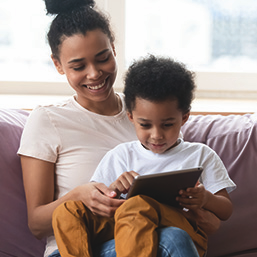
As a psychologist, a hot topic I often discuss with caregivers is screen time. Navigating emerging information around screen time use can be tricky. Negative, fear-based narratives and messaging (such as "too much screen time will cause brain rot," or "if you give a child access to screen time before a certain age, you're a bad parent") can fuel unnecessary guilt and anxiety for caregivers who occasionally use screen time as a tool. In reality, the impact of digital media depends on what, when and why children engage with screen time.
I like to think about screen time like treats at a birthday party or fast food on a busy night – it’s fun, enjoyable and helpful. But as we know, too much of almost anything can become unhelpful and even harmful, while thoughtful and moderate use can fit into a healthy family routine. Screen time used thoughtfully and in a balanced way can offer strong benefits.
When taking a balanced and informed approach to children's screen time, the World Health Organization (WHO) guidelines are a good place to start. Screen time for children under two years old is not recommended. Up to one hour of screen time per day is recommended for children ages two to four, with an emphasis on high-quality screen time and co-viewing. For children over the age of five, consistent limits around screen time can help create space for activities that support creative play, movement and outdoor play, social connection, and reading. Risks associated with not following these guidelines include reduced physical activity (and a higher obesity risk), developmental delays, impaired sleep quality, and reduced opportunities for parent-child connection and social interaction (World Health Organization, 2025).
It's important to remember that these are guidelines, not rigid rules. Putting on a high-quality, five-minute clip for your 18-month-old while you wash the dishes or engaging in a FaceTime call with Grandpa and Grandma won't disrupt your child's development.
Now, what type of content should you choose to watch with your child, especially in the early years? As a psychologist, I like to recommend three categories of content:
As long as we set healthy limits and guidelines around screen time, it can actually be a powerful learning tool. The benefits of screen time are amplified when caregivers co-view educational content with their children. Some of the benefits of co-viewing include:
By setting healthy limits around screen time, co-viewing educational content, and being intentional about the content being viewed, caregivers can find a balanced approach to screen time that provides significant benefits. Rather than viewing screen time as inherently "good" or "bad," it may be more helpful to focus on how, when, and why it is being used. When approached thoughtfully and in moderation, screen time can become a meaningful tool for learning, connection, creativity, and social-emotional development.
COMMON SCREEN TIME PITFALLS
What to Watch For
Even when screen time is part of family life, certain patterns can reduce its benefits:
Joanna (Registered Psychologist and Child Mental Health Advocate) and Lara (Learning and Design Specialist) started Psyched About Kids (PAK) in 2016 because they are obsessed with human potential! PAK empowers parents with science-backed knowledge, strategies, and tools to solve our most pressing parenting issues today and make life a little easier, along with ongoing support to implement the desired change. Learn more at psychedaboutkids.com.
See our related articles:






Calgary’s Child Magazine © 2026 Calgary’s Child