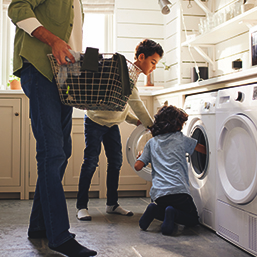
Most child and family psychologists can attest that household responsibilities and chores are a hot topic during initial meetings with parents. Questions often revolve around determining developmentally appropriate chores, deciding whether children should be paid for completing them, and navigating the power struggles that may arise.
There are so many different perspectives on chores and household responsibilities, but one thing that research consistently shows is that they are good for kids. Most importantly, they build resilience. Introducing chores and household responsibilities in the early years can contribute to future academic and professional success, healthier relationships, and overall wellness (Harvard Center on the Developing Child, 2026).
But how do ordinary tasks like emptying the dishwasher contribute to future success? There are several reasons for this:
Chores are an opportunity to build self-efficacy. Although initiating the task may need some extra encouragement or even an external reward, completing the task offers many benefits. Firstly, completing a task provides children with a genuine sense of accomplishment. Every time a child follows through on a responsibility, their brain experiences a dopamine hit – the satisfaction of achieving a goal. This helps to strengthen intrinsic motivation over time. As children repeatedly experience success, they begin to develop confidence in their own abilities and learn that they can do hard things.
Chores teach teamwork and contribution. Ultimately, when everyone in the family contributes to the household in some way, this improves family cohesion and connectedness. Families function best when everyone contributes in meaningful ways. When children help around the house, they learn that they are valued members of the family team. Working together fosters communication, cooperation, perspective-taking, and problem-solving. These are essential and foundational skills that foster healthy relationships in the future.
Chores strengthen executive function skills. A simple task like unloading the dishwasher involves much more than putting dishes away. Children must follow multiple steps, sustain attention, organize items, remember where things belong, and solve problems along the way (ie., “Where should this new bowl go?”). When these types of tasks are practiced consistently, the executive functioning skills become stronger. These skills support success not only in childhood, but well into adulthood.
Chores build emotional regulation and frustration tolerance. Every time we complete a task we don’t want to complete, we engage in something psychologists call “behavioral activation.” Behavioral activation helps regulate mood and emotions by intentionally increasing engagement in meaningful, rewarding, and goal-directed activities. And yes, chores definitely count as goal-directed activities.
Of course, understanding the benefits of chores doesn't mean that implementing them is always easy. What happens when your child pushes back? What if every reminder turns into a power struggle? What if you don’t know where to begin?
Here are some universal tips and strategies to support the implementation of chores and to reduce the likelihood of power struggles:
The value of chores extends far beyond a tidy home. They provide daily, real-life opportunities for children to develop confidence, resilience, responsibility, and family belonging. These ongoing efforts lay a solid foundation for building skills and healthy habits necessary for lifelong growth and wellbeing.
Joanna (Registered Psychologist and Child Mental Health Advocate) and Lara (Learning and Design Specialist) started Psyched About Kids (PAK) in 2016 because they are obsessed with human potential! PAK empowers parents with science-backed knowledge, strategies, and tools to solve our most pressing parenting issues today and make life a little easier, along with ongoing support to implement the desired change.
References:
Making Caring Common. (2026). Chores & caring kids. Harvard Graduate School of Education. https://mcc.gse.harvard.edu/
See our related articles:






Calgary’s Child Magazine © 2026 Calgary’s Child