For many families of children experiencing disabilities, summer camps can feel complicated. Camp is supposed to be carefree and joyful, yet too often families are left wondering whether their child will truly be included, understood, or supported.
Adapted and inclusive camps change that story. When done well, they do far more than fill a week in July. They build confidence, independence, friendships, and a lasting sense of belonging that follows children into school, sport, and everyday life.
Across Calgary, adapted camps have become powerful spaces where kids show up as they are and discover what they can do.
At the heart of this work is Calgary Adapted Hub powered by Jumpstart, a year-round community connector that helps families navigate inclusive and adapted sport and recreation opportunities. Through key partnerships with fourteen sport and recreation organizations and over 120 community sport groups, the Calgary Adapted Hub powered by Jumpstart supports programming that is intentionally designed so children of all abilities can participate in quality summer camp experiences.
Confidence grows through doing
Confidence is not taught through instruction alone – it grows through experience. Adapted camps can create environments where children are encouraged to try, experiment, and succeed in ways that work for them.
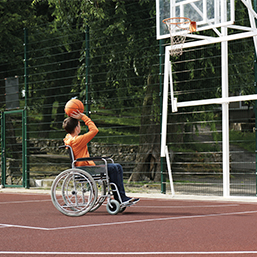
For some campers, confidence starts with small moments. Shooting a basketball from a lower hoop. Playing in a space that is aware of their sensory needs. Rolling onto the court knowing the space is set up for wheelchairs.
For others, it is raising their hand during group games, practicing independence, or speaking up to share an idea.
These moments matter because they are repeated. Day after day, children are given chances to practice skills, make choices, and take healthy risks. Over time, those experiences shift how children see themselves and they begin to view challenges as something they can approach rather than avoid.
Skills that transfer beyond camp
Adapted camps support skill development in ways that extend far beyond sport or recreation. Children develop physical skills like balance, coordination, strength, and endurance, but they also build social and emotional skills that show up in everyday life.
Camps emphasize communication, problem-solving, turn-taking, and cooperation. Campers learn how to navigate group routines, follow schedules, adapt to new environments, and advocate for their needs. These are skills that transfer directly into school settings, community programs, and family life.
Because adapted camps are often run in partnership with trained and inclusive recreation leaders, programming can be adjusted in real time. Activities are modified without singling children out, and supports are built into the environment rather than added as an afterthought.
The power of friendship and belonging
One of the most meaningful outcomes of adapted camps is connection. For many children, camp may be the first place where they meet peers who share similar experiences, use similar equipment, or understand what it means to navigate the world differently.
Friendships form naturally when children feel safe being themselves, and camps create shared experiences through games, laughter, teamwork, and even frustration. Those shared moments lay the foundation for authentic relationships.
That sense of belonging extends to families as well. Caregivers meet other parents who understand their questions, concerns, and hopes. Conversations start on the sidelines and continue long after camp ends.
Independence that builds over time
Adapted camps are also powerful spaces for developing independence. Campers practice making decisions, managing transitions, and participating in a supported environment without their caregivers.
For some children, independence looks like staying at camp for a full day. For others, it may mean learning to manage equipment, communicate preferences, or navigate sensory needs with confidence. These steps, while sometimes subtle, are deeply meaningful.
Families frequently report that after camp, children show increased willingness to try new activities, join community programs, or advocate for themselves at school. Independence grows not because children are pushed, but because they are trusted and supported.
Through Calgary Adapted Hub’s Family Navigation Service, families can receive personalized guidance before and after camp. In the past year, 112 families accessed navigation support to help find the right programs, identify accommodations, and build pathways for ongoing participation. This continuing pathway of participation ensures that growth at camp leads to sustained inclusion long after the summer months end.
A community effort rooted in partnership
None of this work happens in isolation. Adapted camps thrive because of strong partnerships across the city. Recreation centres, sport organizations, community groups, and funders collaborate to remove barriers and create inclusive opportunities.
Our key partners including the City of Calgary, Genesis Centre, MNP Community & Sport Centre, Mount Royal University, Siksika Nation, Sport Calgary, Trico Centre for Family Wellness, Tsuu Tina Nation – 7 Chiefs Sportsplex, University of Calgary, Vecova, Vivo for Healthier Generations, Westside Recreation, WinSport, and YMCA Calgary, along with our community sport partners, play a critical role by opening their spaces, training staff, and committing to inclusive practices.
Long-term impact that lasts beyond summer
The true value of adapted camps is not measured solely by attendance. It is seen in the long-term outcomes for children and families.
Children who experience inclusive camps are more likely to continue participating in sport and recreation, and carry their newfound confidence into school, friendships, and new environments. Families feel more connected and supported, and communities become stronger and more inclusive.
Adapted camps send a clear message to children: You belong here. You matter. You are capable.
For many children, that may be the most meaningful takeaway of all.
Jen is the Director of Calgary Adapted Hub powered by Jumpstart. For more information, visit calgaryadaptedhub.com.
See our related articles:







Calgary’s Child Magazine © 2026 Calgary’s Child