
I am a lifelong Star Trek fan. I started watching the original series on reruns, and I have always had a fascination with Spock in particular. The half-human, half-Vulcan was always interesting to me because of how he tried to understand human nature from a position of logic. One of the guiding principles of his Vulcan half was the philosophy of infinite diversity in infinite combinations (IDIC). This is not to suggest that all diverse possibilities are necessarily good, but that they are infinite. The sum total of divergent thought in infinite combinations results in more effective, more comprehensive approaches to problems than any single individual or group could contribute independently.
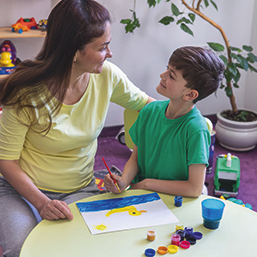
To do so, however, we need to create environments informed about neurodiversity and develop supportive environments for divergent thought that encourage healthy risk-taking. This has shaped my practice in working with individuals with neurodiverse conditions and, I believe, guides us in parenting and educating neurodivergent children through acceptance by creating supportive environments that encourage divergent thinking and risk-taking.
Increasing numbers of children and adolescents are experiencing success at school and in the community as we develop a greater understanding of the nature of these neurodivergent conditions, which typically include ADHD, autism, learning disabilities, giftedness, and many associated anxieties and social-emotional conditions.
It is worth noting that while we have seen an increase in the number of individuals being diagnosed with these conditions over time, largely due to enhanced research understanding of what these conditions actually are, the number of false positives, or misdiagnoses, has also increased.
Coupled with this, numerous posts on social media by people who are, or claim to be, neurodivergent lead to a great deal of confusion. An anecdote on TikTok is not generally consistent with what research may tell us. As a result, we need to be very clear about what neurodivergence is, when it becomes a significantly problematic clinical condition, and how best to accommodate and support individuals who have bona fide neurodivergent conditions.
If an individual has been diagnosed using a robust assessment process led by a psychologist with expertise in neurodivergence, we can be more assured that we are avoiding a Type 1 error (false positive) and are, in fact, working with an individual who has a specific neurodivergent profile. However, even a “specific neurodivergent profile” can be somewhat challenging to define given the various ways in which people present with neurodivergent symptomatology. Regardless, certain strategies and approaches have proven effective in developing supports and accommodations that best suit the needs of neurodiverse individuals, depending on their developmental profile, the severity of their diagnosis, and their overall degree of functioning in social, academic, and community situations.
First, it is critically important that the individual understands, to the best of their ability, the nature of their own specific kind of neurodivergence. This often occurs during the assessment process but can also occur on an ongoing basis through learning via reputable sources, such as those included at the end of this article. Numerous online resources, including websites, blogs, and videos, can be very helpful for parents, children, adolescents, and educators who work with students with neurodivergent profiles.
Once the individual and their support network are well informed about the specific nature of the individual’s neurodivergent profile, we can develop a supportive environment at home, at school, and in the community. At home, providing opportunities for enhanced communication, depending on the individual’s developmental level, and creating a non-judgmental yet structured environment is often highly effective. Allowing the individual to participate in their special interests and accommodating their sensory needs, while gradually encouraging them to engage in topics other than their special interests and develop more tolerance for sensory challenges, is often conducted in the home environment, where they have a safe space to regulate their emotions and regroup if they become upset.
Schools can often support neurodivergent children by engaging in active dialogue with parents to learn more about the specific kinds of neurodivergence displayed by the individual and maintaining consistent expectations between school and home. Schools, in particular, can become excellent opportunities for social experimentation where students with neurodivergent profiles can try on new relationships and experience natural consequences. For instance, if a child has a specific topic of interest, such as a particular video game, and that is all they talk about, they may find that their peers become less tolerant of that topic over time. The natural consequence of potential social isolation can be mediated by adults who understand the individual’s neurodivergence and can coach them on ways to express alternative interests or show interest in others.
Developing an understanding of the specific nature of neurodivergence and creating a supportive environment for the child are both ongoing learning opportunities for adults, as well as for the peers of individuals who have neurodivergent profiles. The more we understand and the more support we can provide, while also encouraging growth and appropriate development, the more children with neurodivergent profiles can become comfortable and ultimately feel better about challenging themselves to become stronger self-advocates, while accepting their own unique characteristics and traits.
It becomes an issue of acceptance as opposed to exclusion. We have learned through decades of research and clinical experience that acceptance can lead to enhanced risk-taking, which leads to enhanced learning. This is good for students, their parents, their educators, and the community in general. To quote a favorite sci-fi franchise, it encourages them to “boldly go!”
Brent Macdonald, PhD, is a psychologist with Crux Psychology and a long-time contributor to Calgary’s Child Magazine. He can be reached at
Resources: embrace-autism.com and autismcanada.org/acresources/publications
See our related articles:







Calgary’s Child Magazine © 2026 Calgary’s Child